If you've been hearing scratching in the attic at night, finding chewed papaya or mango on the ground, or seeing droppings in the garage — you're not alone. Across Pearl City, Aiea, Waipahu, Waikele, Kunia, and Mililani, rat activity has been climbing steadily over the last few years, and our service calls back that up. Central Oahu's mix of mature fruit trees, dense greenbelts, and older rooflines is basically a five-star resort for rodents.
Know Your Rat: Roof, Norway, or Polynesian
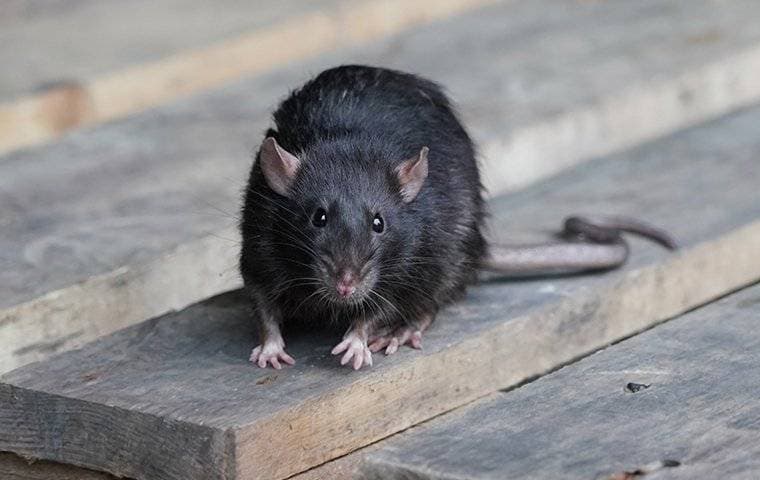
Hawaii has three main rat species, and knowing which one you have changes the treatment plan completely. The roof rat is the most common in Oahu homes — sleek, agile, and a phenomenal climber. They travel along utility lines, tree branches, and fences to reach attics and upper stories, which is why you hear them overhead at night but rarely see them on the ground. The Norway rat is bigger, heavier, and burrows at ground level along foundations, under concrete slabs, and around dumpsters — common around commercial areas in Waipahu and industrial Pearl City. The Polynesian tree rat is smaller and more slender than both, introduced by early Polynesian voyagers over a thousand years ago, and loves mature trees, shrubs, and rooflines.
Why Central Oahu's Rat Population is Booming
Why the boom? A few reasons hit Central Oahu specifically. Warmer winters mean no population die-off. The explosion of backyard fruit trees — mango, papaya, lychee, starfruit — across Pearl City, Aiea, and Mililani provides a year-round food source. Older homes in Pearlridge, Aiea Heights, and along Kamehameha Highway have rooflines and vent openings that aren't sealed to modern standards. And feral chicken populations, which scatter feed and scraps, indirectly fuel rat colonies.
Traps Alone Will Never Solve It — Exclusion Does
The biggest mistake we see homeowners make is focusing on traps without addressing exclusion. You can catch ten rats in a week, and if the attic still has a golf-ball-sized gap in an eave, ten more will move in by month's end. Effective rat control in Central Oahu requires three things working together: active trapping and baiting to knock down the current population, sealing of entry points (vents, eaves, roof gaps, utility penetrations, garage door sweeps), and yard management — trimming tree branches back six feet from the roofline, picking up fallen fruit, and securing pet food.
Signs You Already Have a Rat Problem
Signs you may already have a rat problem: droppings (spindle-shaped, about half an inch for roof rats), scratching or scurrying sounds in the attic or ceiling at night, gnaw marks on PVC pipes or electrical wiring, shredded paper or insulation used as nesting material, and a musty smell in enclosed spaces. Rats can chew through wiring and start electrical fires, and they carry leptospirosis — so this isn't a problem to wait out.
How Terminatus Handles Rats Across Central Oahu
Terminatus Pest Control handles rodent trapping and exclusion across Pearl City, Aiea, Waipahu, Waikele, Kunia, Ewa Beach, Kapolei, Mililani, Wahiawa, and the North Shore. We identify the species, seal the entry points, and set up monitoring stations to keep the perimeter clean long term. If you're hearing something up there at night, don't wait — call 808-321-3282.